
ADV @ UNDERCONSIDERATION Peek here for details

BROWSE
Client
Self-promotion
Quantity Produced
1
Production Cost
Garbage, a piece of string, and some toner: probably $2 – $3
Production Time
1 day
Dimensions (Width × Height × Depth)
8 in × 11 in
Page Count
12
Paper Stock
Paper bags, burger wrappers, newspaper, junk mail
Number of Colors
CMYK
Varnishes
–
Binding
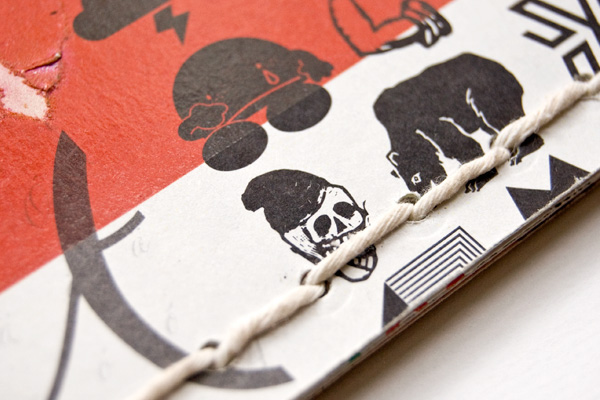
Hand-stitched
Typography
Garage Gothic by Font Bureau
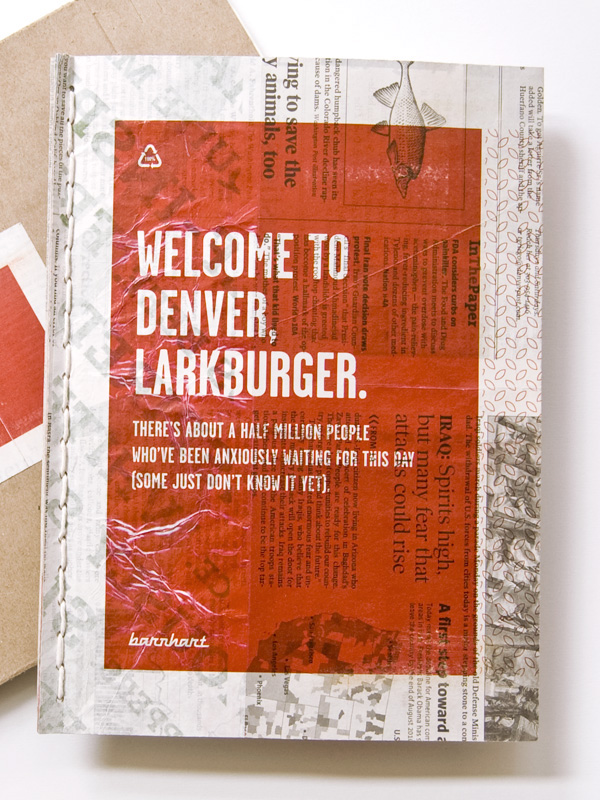
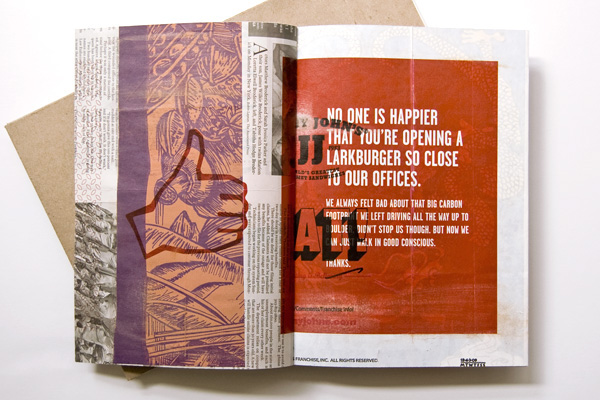
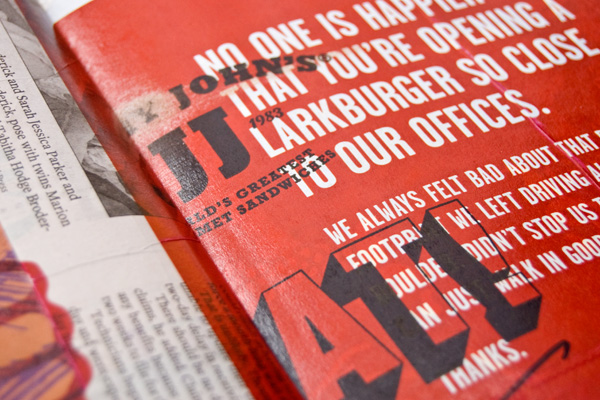
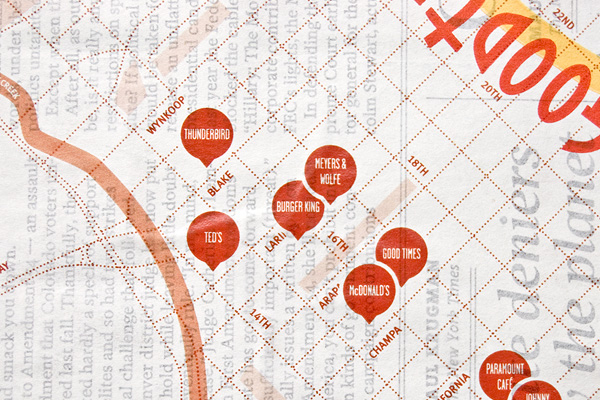
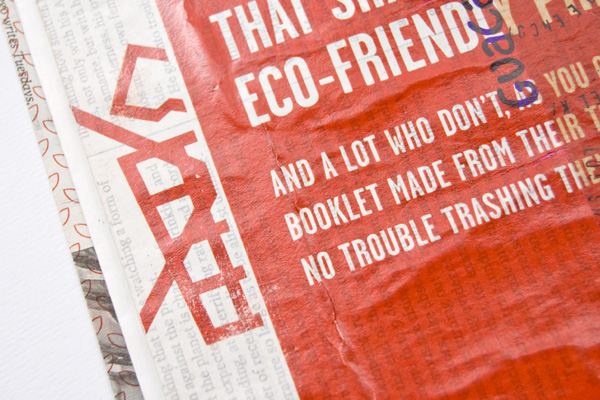
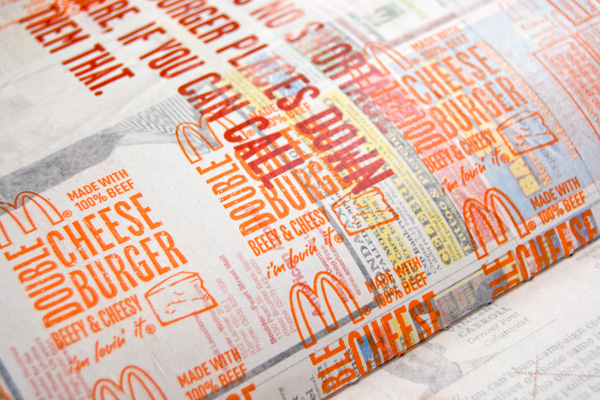
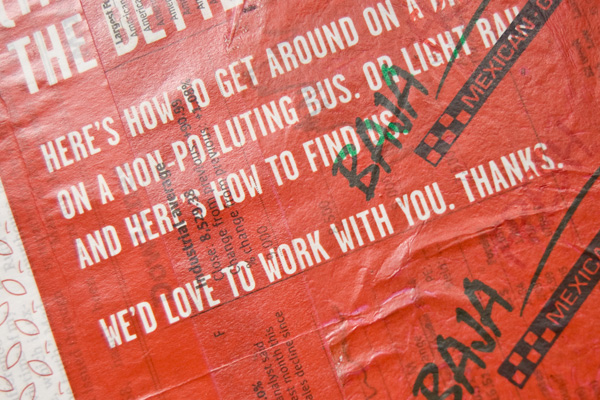
One of the biggest questions that plagues graphic designers is how to get the attention of a new client, someone who they really want to work with. Magazines, books and even peers tell you to approach them with something unique, something that is relevant to their industry. In theory this makes sense, in practice it’s pretty hard to pull off. So, here is a perfect example, in practice, of how to do it: To introduce themselves to Larkburger, an eco-friendly and 100% natural fast food burger joint that had just moved into their Denver, CO neighborhood, advertising agency Barnhart created a guide highlighting Larkburger’s competition. To drive the point home and appeal to their potential client’s sensibilities, Barnhart used recycled materials from the fast food industry — fast-food bags, newspaper, sandwich wrappers, and various junk mail — and produced a one-of-a-kind mailer printed on their own laser printer and hand-stitched. The result is an engaging, tactile and on-target promotion to get on Larkburger’s good side.
Designer Jim Hargreaves shares some of the perils of DIY-ing with recycled materials:
Each material presented its own challenges. The newsprint for example, was so thin that I had to back it with another sheet before running it through the laser — otherwise, it would simply jam or tear. The sandwich wrappers were also pretty unpredictable; most were treated with some kind of coating that didn’t always react well to the heat of the laser, but as you can see on the cover, it resulted in some pretty cool cracking and warping. Fortunately the Tyvek was the only major clog — I was lucky to even get it yanked out of there… for a few minutes I was almost certain that I had just destroyed a $15,000 printer.

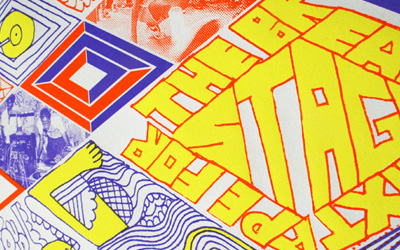
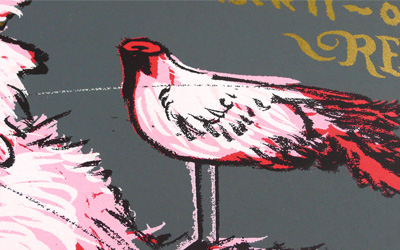
Larkburger Welcome Guide

Production Method
Design
Design: Jim Hargreaves
Special Thanks: Joel Hill, Darren Brickel, Teresa Brown, Jim Glynn
Printing
Jim Hargreaves
This post was published in the original layout of FPO so all images are smaller. Project descriptions as well as production lessons are quoted in the main content area.
Post Author
Armin

Armin Vit
Editor of FPO and co-founder of UnderConsideration LLC.
More: Online / On Twitter

Date Published
September 8, 2009
Filed Under
Books
Tagged with
DIY
hand stitched
laser
recycle


About
FPO (For Print Only), is a division of UnderConsideration, celebrating the reality that print is not dead by showcasing the most compelling printed projects.
FPO uses Fonts.com to render Siseriff and Avenir Next.
FPO is run with Six Apart’s MovableType
All comments, ideas and thoughts on FPO are property of their authors; reproduction without the author’s or FPO’s permission is strictly prohibited
Twitter @ucllc
Sign-up for Mailing List
Mailing list managed by MailChimp
Thanks to our advertisers
About UnderConsideration
UnderConsideration is a graphic design firm generating its own projects, initiatives, and content while taking on limited client work. Run by Bryony Gomez-Palacio and Armin Vit in Bloomington, IN. More…
blogs we publish
Brand New / Displaying opinions and focusing solely on corporate and brand identity work.
Art of the Menu / Cataloguing the underrated creativity of menus from around the world.
Quipsologies / Chronicling the most curious, creative, and notable projects, stories, and events of the graphic design industry on a daily basis.
products we sell
Flaunt: Designing effective, compelling and memorable portfolios of creative work.
Brand New Conference videos / Individual, downloadable videos of every presentation since 2010.
Prints / A variety of posters, the majority from our AIforGA series.
Other / Various one-off products.
events we organize
Brand New Conference / A two-day event on corporate and brand identity with some of today's most active and influential practitioners from around the world.
Brand Nieuwe Conference / Ditto but in Amsterdam.
Austin Initiative for Graphic Awesomeness / A speaker series in Austin, TX, featuring some of the graphic design industry's most awesome people.
also
Favorite Things we've Made / In our capacity as graphic designers.
Projects we've Concluded / Long- and short-lived efforts.
UCllc News / Updates on what's going at the corporate level of UnderConsideration.

Related entries
Severe(d): A Creepy Poetry Collection by Holly Riordan
BOYCO Classpack® Book
Antes de Perder la Esperanza Book
Gunnel Wåhlstrand Exhibit Book
Szép versek & Körkép Book Covers