FPO: For Print Only
_Subscribe to RSSA Division of UnderConsiderationAbout FPOSubmit to FPO

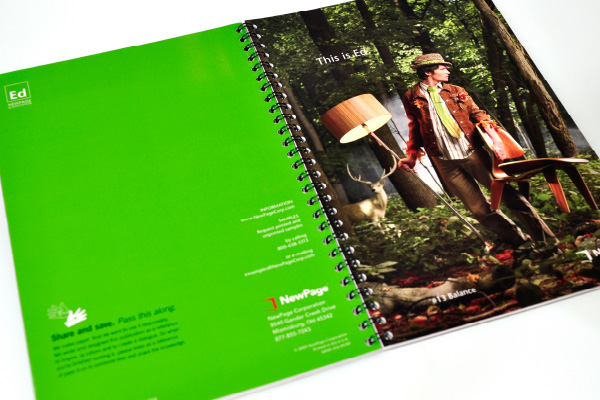
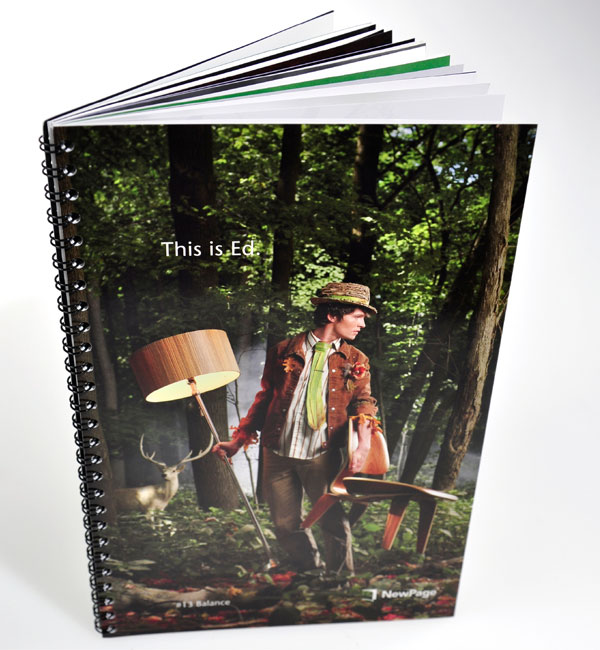
This is Ed # 13 Balance

 ---
BY Bryony / ON / Oct.26.2009 / IN / Brochures
--- Lead Image ---
Project Overview
DESCRIPTION
This is Ed # 13 Balance
CLIENT
DESIGN CREDITS
Froeter Design Company, Inc.
April 2009 - September 2009
PRINT CREDITS
TYPE CREDITS
Production Details
QUANTITY PRODUCED
40,000
PRODUCTION TIME
3 weeks
DIMENSIONS: WIDTH × HEIGHT × DEPTH
6 in. × 9.125 in. × .25 in.
PAGE COUNT
38 + cover
PRINT METHOD
Offset
PAPER STOCK
Arbor Plus Coated: 100 lb Gloss Cover, 100 lb Dull and Gloss Text
NUMBER OF COLORS
100% vegetable-oil based inks: 3 Spot colors + 1 Metallic ink + CMYK
VARNISHES
Gloss, satin and dull spot UV varnishes and coatings
BINDING
Wire-O by Phoenix Binding
OTHER
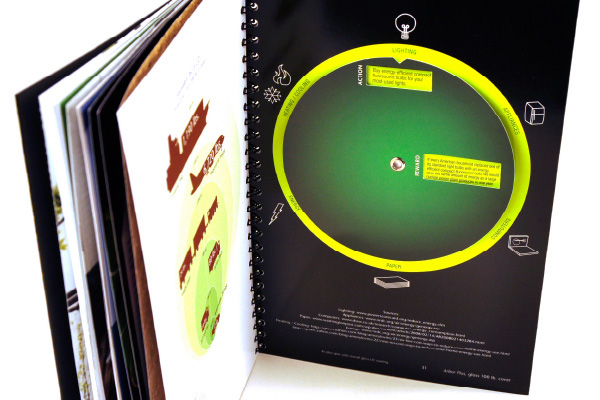
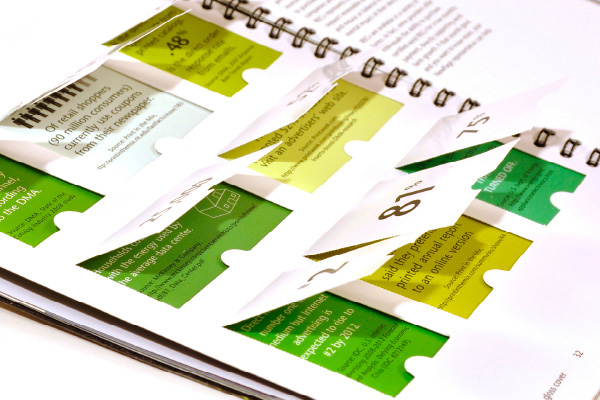
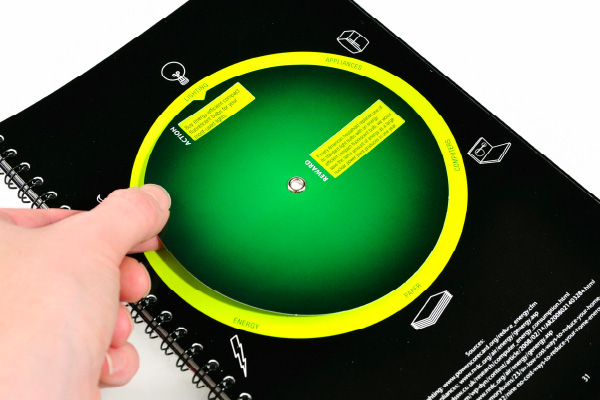
Also includes a die-cut rotating wheel on grommet plus microperforation pop-out tabs
---

IMAGES HAVE BEEN PROVIDED BY THE DESIGNER: www.froeterdesign.com

As your hands touch this brochure, it is hard to believe just how green the entire production truly is. From a beautiful coated sheet using 30% post-consumer recycled fiber to vegetable based inks, it is perhaps best to give you the hardcore details:

Ed #13 is printed on Arbor Plus®, which carries three chain-of-custody certifications (tri-certified to FSC, SFI and PEFC). Arbor Plus is manufactured in North America and contains 30 percent post-consumer recycled fiber. This paper complies with Lacey Act Requirements.

This entire report was printed with 100% vegetable-oil based inks on recycled paper that contains 30 percent post-consumer waste. The electricity used to print this report was 100 % offset with renewable energy credits (REC's) generated from wind power in the U.S. Also, our printer recycled virtually all manufacturing materials associated with the production of this project employing a Zero Landfill Policy for Non-Hazardous Manufacturing Waste.

This issue used 23,834 lbs. of 30 % post-consumer waste paper. The environmental savings from using this paper in lieu of virgin paper is equivalent to:
Wood usage: 11 trees not cut down
Wastewater: 35,542 gallons of wastewater flow saved
Solid waste: 2,158 lbs. of solid waste not generated
Greenhouse gasses: 7,398 lbs. net greenhouse gases prevented
Energy: 25,000,000 BTU's energy not consumed

The source of these calculations is the Paper Calculator.

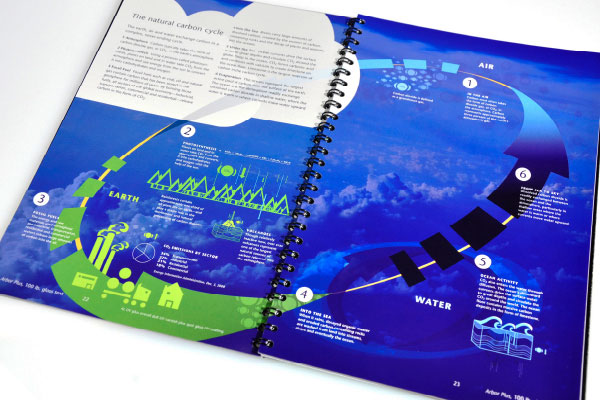
Beautiful in its design and selected photography, beautiful in production values and considerations this brochure is also greatly interactive as you touch the finishes, varnishes, and textures... as you play with the rotating wheel and dig deeper into the hidden messages waiting for your information discovery.

More information about the Ed series and sample requests.
<em />This is Ed</em> # 13 Balance --- <em />This is Ed</em> # 13 Balance --- <em />This is Ed</em> # 13 Balance --- <em />This is Ed</em> # 13 Balance --- <em />This is Ed</em> # 13 Balance --- <em />This is Ed</em> # 13 Balance --- <em />This is Ed</em> # 13 Balance --- <em />This is Ed</em> # 13 Balance --- <em />This is Ed</em> # 13 Balance

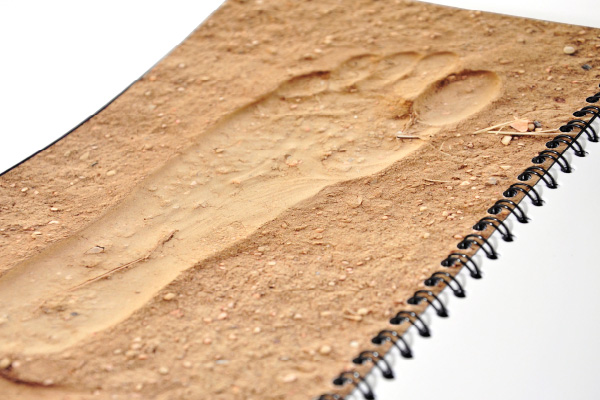
Of Note: This page has a nice thick varnish texture that makes the page feel like sand. --- <em />This is Ed</em> # 13 Balance --- <em />This is Ed</em> # 13 Balance
---
THIS POST HAS 15 COMMENTS

---
IT HAS BEEN TAGGED WITH / / / / / / / / / / / / / / /

---

Comments

 ---


mk2’s comment is:

What the ...? Cool...!
It's great so see more designers embracing sustainability.

On Oct.26.2009 at 08:56 AM
---


Duane’s comment is:

Where can someone get a sample of this? Brilliant work.

On Oct.26.2009 at 11:45 AM
---


Armin’s comment is:

Duane, good point. You can request Ed samples at edliveshere.com.

On Oct.26.2009 at 12:17 PM
---


EnergonCube’s comment is:

Like the concept, but the infographics need some help.

On Oct.26.2009 at 04:51 PM
---


Jess Sand’s comment is:

Um. I realize designers love sexy finishes, but metallic inks and UV coatings are anything but sustainable. Die cuts, full bleeds, heavy ink coverage, additional binding components, etc. all create unnecessary paper and other waste that could easily be avoided with a little thoughtful design.

I'm not saying these elements don't have a time and place in design, but a piece produced specifically to educate about sustainability ought to do so a bit more responsibly.

I'm getting a little tired of seeing all these paper companies put out "sustainability" guides without honestly acknowledging and implementing legitimate practices themselves.

For a much better example of sustainable design (and in my opinion, a better design all around), see FPO's coverage of Jim Hargeaves' Larkburger promo.

And for real, independent (as in, not bought by the paper companies) advice on sustainable design, please, please visit Re-nourish.com

Yes, that's a totally self-serving plug, but we've worked really hard to give print designers unbiased info about their sustainable options.

–Jess

On Oct.31.2009 at 11:47 AM
---


Chris Froeter’s comment is:

Jess,
I appreciate your passion for sustainable design. Although, I must say as part of the creative and editorial team responsible for this piece, I don’t think you truly understand what this piece is all about.

First off, our project conforms to many of the benchmarks your organization is trying to achieve.
-- It was made with 30% PCW.
-- Tri-certified by FSC, SFI and PEFC.
-- Energy offset with wind credits.
-- Sourced and produced by a local midwest Re-Nourish recommended "Greener Printer".
-- Maximized sheet size to reduce waste

One other very important consideration you have overlooked is one of shelf life. The above considerations are meaningless if the piece is immediately thrown in the trash. Ed#13 is part of a series of informational brochures that have a very long shelf life. We have heard from designers and art directors that this series remains a valued part of their reference library. What could be more sustainable?

We made a conscious decision to print on a UV press because of the substantially lower VOC emissions. We used Eco-Soy UV inks that are the latest technology available which reduce emissions, increase de-inking capabilities and increase printability. Incidentally, this follows your website’s recommendations for soy-based and UV curable inks.

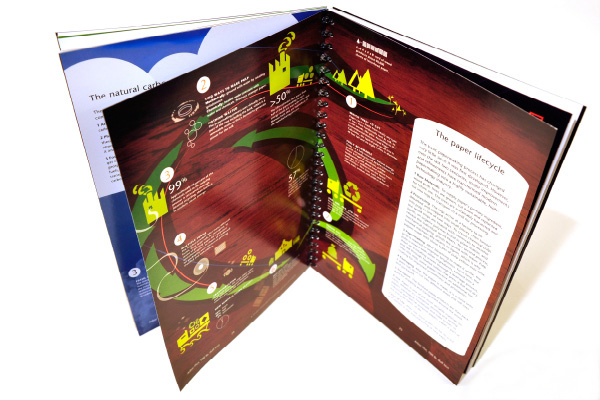
Go Digital instead? This Ed references over a dozen independent sources; including the United Nations University, EPA, US Energy Information Agency, Conservatree.org, the Uptime Institute, FSC, SFI, McAfee, Philip White, RMIT, the AMA and more.

The objective is to educate and promote sustainability in all areas, e-media and print. You should know as a sustainable promoter that e-media and e-waste are growing exponentially and are not renewable resources. The carbon footprint globally of server farms to host digital media will soon overtake most industries except transportation. We are looking at a growing problem of energy consumption that is greater than anything we have ever experienced. I strongly disagree that going digital is always the RIGHT solution for the environment.

"The internet is the fastest growing source of CO2 to the atmosphere...it doubled from 2002 to 2006." http://www.nowpublic.com/technology/internets-carbon-footprint-server-farms-vs-your-desktop-pc
E-waste
http://www.livescience.com/environment/etc/091102-e-waste-problem-grows.html

The real strength of Ed#13 is the content. This piece looks at the environmental concerns and energy consumption of both print and e-media. We would be happy to send you a copy of Ed#13 so that you can better understand what we are presenting.

On Nov.02.2009 at 04:48 PM
---


Jess Sand’s comment is:

Hi Chris,

Thanks for the response - I do appreciate the conscientiousness that went into specifying responsible paper stock and other production decisions.

My beef has nothing to do with digital vs. print (not sure where you got that from). I'll repeat the lead point in my original post: "I'm not saying these elements don't have a time and place in design, but a piece produced specifically to educate about sustainability ought to do so a bit more responsibly."

In other words, you can spec all the recycled, FSC stock you want and buy all the energy credits you can, but if you're using three times the resources as normal thanks to extravagant design decisions, then you're not really making much headway, are you?

I absolutely think it's important to get this conversation going in any way we can, and that will inevitably include some fits and starts. But we educators have to be very careful about walking the talk - I struggle with this every day. And when commercial interests - such as paper companies - start claiming to be educating the industry, we need to take what they distribute with a grain of salt. They are simply not an independent resource.

The paper companies continue to make incremental improvements, and for that I am grateful. We need all points on the supply chain to be actively involved in the conversation about what truly sustainable design actually looks like. There are no simple prescriptions (which is why Re-nourish emphasizes strategic planning and life cycle thinking). But I'm sorry, I keep seeing these gorgeously-produced, resource-intensive books put out by an industry with a vested interest in maintaining the status quo, and half of the claims made are specious at best. It's very, very frustrating.

I would really like to see less demonizing of each other, less debate at who's worse or better, and more genuine exploration of actual - practical - solutions. And I'd like to see those solutions demonstrated through the physical design of these educational materials.

I would be happy to receive a copy of Ed 13, and to bite my tongue if you can explain to me how use of metallic ink (though sexy) serves the message of the piece? Or how printing 40,000 copies of this book serves the message (I would love to know when all those copies are finally distributed to people who will actually use them)? Or how a non-recyclable die-cut wheel with grommet serves the message?

These are the kinds of extravagances I'm talking about. On their own, they can be powerful tools to communicate. But do those design choices genuinely serve the message you're trying to send?

On Nov.03.2009 at 09:18 PM
---


chris Froeter’s comment is:

First let me say, this discourse is good. It is good for sustainable design thinkers and good for the readers of this blog.

You are absolutely right that “there is a time and place” for this type of design. The Ed series, as I mentioned before is an educational program with a long shelf life, in my mind, this is the appropriate time and place for this type of design. We know that these pieces are effective by the number of times we have gone back to press to reprint each of the 12 previous issues. This is due to customer demand for the information we produce. From what we see on the Ed site we are reaching and informing tens of thousands of viewers in 154 nations. People want content and to see both sides of the story. You know as well as I do that black type on white stock lacks the power to captivate the reader. That approach may be sustainable by your terms, but if the piece is not effective it's not sustainable. The Ed series was designed to provide tools for the creative community. Sometimes those tools are techniques and print comparisons. I am interested in how you computed our use of three times the resources necessary, to create a single backing page that includes both the die cuts and wheel. Your statement there is ill informed and off base. The additional resources to construct that page were nominal. We printed on a relatively new 30% PCW stock. For our series to be an effect print resource it’s important that designers and art directors understand the printability, scoring and folding capabilities of that stock, for it to be considered a viable alternative. Our design decisions were not without considerable thought and sweat, but I confess that we may have missed a few.

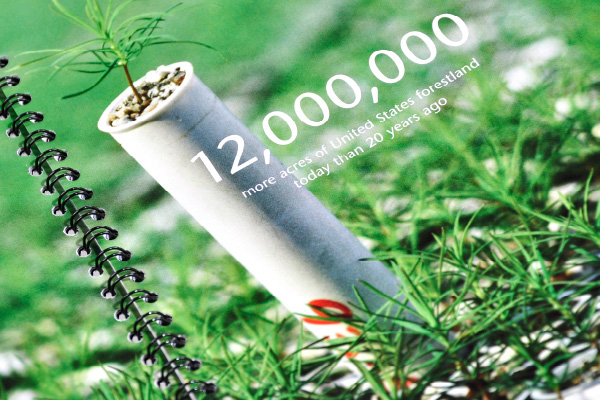
I find it interesting that you so freely attack and demonize the paper industry here while strongly supporting them on your website. There are 12 million more acres of forest in the US in the last 20 years. That’s the size of Vermont and New Hampshire combined. The paper industry currently generates over 50% of their power with wood remnants, a renewable, sustainable resource. Very few industries can claim that. What is Google doing about their exponential energy consumption and why aren’t the sustainability experts screaming at the top of their lungs about this issue. Instead it’s a pissing match about the percentage of PCW and the amount of ink put on a sheet of paper, which is a myopic view panoramic problem.

To that point, you encourage 100% PCW...it simply is not a realistic option for all projects. Paper fibers only retain their strength for so long; new fibers must be added. PCW stocks are a consumer driven product, but is it the right thinking and direction? What concerns me about heavy PCW stocks is what we DON’T see. How much energy and toxins go into the recovery process. As an expert in this field I would love to hear why your organization so strongly supports100% PCW. How about transportation? If you have to ship tons of 100% PCW up the Mississippi by cargo ship to a manufacturing facility you may in fact be contributing more emissions to the atmosphere than by using a 10% or 30% PCW paper.

I would like to see this conversation move beyond a design critique – that is just too easy – to issues that inform and change the course of where we go in the future. I feel compelled to point out, the same issues of unbiased and self-serving you label on the paper industry, fall on your responses as well. You are clearly promoting your organization and yourself.

This edition of Ed is expanding the sustainability topic. "Print less" is an easy mantra that has become a fraction of the conversation, and just isn't going to cut it in the future.

On Nov.04.2009 at 01:27 PM
---


Jess Sand’s comment is:

Hi Chris,

Pissing match? Attack and demonize? Slow down, please.


1. The paper industry is a commercial, for-profit enterprise, and as such is not an independent source of scientific data. No judgments there, no demonizing, simple fact. Re-nourish makes no money. We accept no fiscal sponsorship from any commercial interest in the design industry (in fact, we currently have no fiscal sponsorship at all save what the three of us partners have spent out of our own pockets).

So yeah, we're promoting Re-nourish everywhere we go. But we sure aren't profiting from it - and the paper companies are. So I'd argue your claim that "the same issues of unbiased and self-serving you label on the paper industry, fall on your responses as well." doesn't quite hold water. I'll let you know when I start making money from Re-nourish, I promise.


2. I didn't demonize the paper industry. Where are you getting this from? Seriously, I think you need to step back and re-read my posts and my position on this stuff. Let's be honest about what each party is actually saying.


3. The digital vs. paper argument that you keep raising is a fallacy. Both have incredibly detrimental environmental impacts. This competitive round-and-round over who's worse distracts from the fact that every industry must be held accountable (or better yet, hold themselves accountable). Do I really need to bring up the digital tools you used to create Ed #13?


4. You seem to want to make Re-nourish out to have some ulterior motive. That's fine - I expect that because we're vocal about this stuff. But publicly misrepresenting our position isn't going to further the discourse. To respond to your implication that we expect designers to use 100% PCW stock, I'll just quote our website:

"Rather than demand some unattainable standard, we believe it's entirely possible to create a definition of sustainable design that addresses the environmental, economic, and human realities that we all face as professional designers and design students."

and

"...we use the description greener to refer to materials and processes that are, in one way or another, more sustainable alternatives to their conventional counterparts. That might mean they use less energy or less water, or produce less waste. They might contain fewer (or even no) toxic ingredients. They might better support fair trade or human rights. But very few things in life are perfectly green, so why pretend otherwise?" [source]

In other words, we don't actually dictate any hard-and-fast rules. Our "Sustainable Design Roadmap" provides an open-ended list of questions that can be addressed during the design process, and our other resources provide deliberately high targets to account for the fact that not everyone will ever reach (or try to reach) said targets. We don't expect everyone to spec 100% PCW on every project - and we've never actually recommended it.

At the end of the day, we've worked incredibly hard to avoid what you're accusing us of - demonizing people. We simply haven't. We've reached out directly to paper companies, to professional design associations, to working designers, to sustainability experts, and we've been met by more cooperation than resistance (though the resistance, clearly, is there).

I recognize I've put you on the defensive by the very nature of my posts, and I apologize if I've come across as attacking. That said, I welcome anyone to read through our website and join the conversation so we can get some more voices in here.

On Nov.04.2009 at 05:00 PM
---


Chris Froeter’s comment is:

Jess,

It's clear we both have strong opinions on this issue. This is a very challenging issue with very few universal answers. While we don’t have to see eye to eye we should both be able to agree that this problem needs to be shared with more people and the discussions need to incorporate the full story.

To be very clear about the document we produced. Sure, it was published by a for-profit enterprise, yet all the data referenced was from unbiased international and government organizations that study these issues daily. Such as:

United Nations University / EPA / US Energy Information Agency / Conservatree.org / The Uptime Institute / FSC / SFI / McAfee / Philip White / RMIT and others.

Our for-profit client did not provide us with information to publish nor did they tell us what sources to quote. So I don’t really see that in this case that they should be viewed as biased and subject to scrutiny. If I misrepresented your view of demonizing the paper industry, I apologize. But with your statements from earlier posts you can see where I may have been confused. “I'm getting a little tired of seeing all these paper companies put out "sustainability" guides without honestly acknowledging and implementing legitimate practices themselves.” or “half of the claims made are specious at best.”

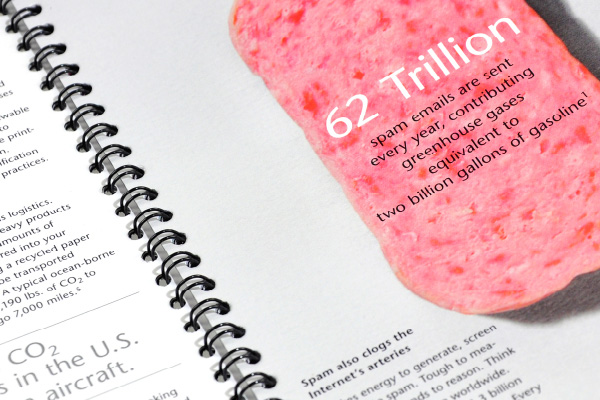
Ultimately, I think we have the same view on the print vs. digital argument. Although I strongly disagree that this argument is a fallacy. For example, there are 62 trillion spam emails a year that are typically never read and burn energy equivalent to two billion gallons of gasoline. In addition, we are building more and more server farms to support sites such as Facebook, that devour unprecedented amounts of energy. Yet there is no way of recapturing any of that output. I think you misunderstood my point. I never said the paper industry doesn't have an impact on the environment. They do, but they are and have been working on this issue for some time. My concern is that the digital side of the argument is not addressing the problem and where does that take us? We are simply trying to bring this topic to the public discussion and not hide it any further. We applaud what Re-nourish is doing, but we shouldn’t automatically discount a for-profit enterprise with a wave of a generalization wand.

I'll end my post here, but add that I think we need to better understand the other views in the room before we deny them a voice.

Thanks Armin for creating a space for this discussion, even if it does get a bit steamy from time to time. Thanks Jess for the discourse.

On Nov.04.2009 at 07:28 PM
---


Eric’s comment is:

Yes I agree this is a great discussion to be having. One I wish that would occur at a design conference and not tucked away on a blog. Otherwise we're simply preaching to the converted.

On a related note, I just got a promotional piece in the mail from Neenah Paper. It was very "pro-print". This, of course, for obvious reasons as they are a paper company. The point of this Neenah piece was to slam the "digital" design world claiming that their eco-footprint was simply way more than the print world because of mainly "e-waste". This is a true assessment, but not the whole story.

To make a printed piece you need a number of things: a printing press, a computer, a server at the printer to host the files, gas for transport of the final printed piece and the raw resources, trucks to carry the wood/paper, water to power the pulping mill, energy to power that same mill, energy to power the studio/press/etc. and the list goes on. Of course you'll also need to calculate the gas used to cut the trees, the water and energy needed to manufacture the chain saws to cut down the trees and the gas to transport the new trees to replant, the water and land needed to grow the cattle to make the hamburger to feed the lumberjacks on the job, the paper needed to package the hamburger (and of course water, gas and waste in the making of the package), the energy to manufacture the ink/binding of the printed piece as well as the machines to harvest the metals to make the bindings etc.. the list is endless. It is almost impossible to calculate the true LCA of a print piece or a digital piece... the main difference is with a website you remove the printing component. Does it equal out at the end? What has the biggest footprint? It's hard to say, so it's important that we have independent resources to verify claims like that of Neenah Paper.

I support print when it serves the right purpose and done responsibly, however it's in the best spirit of democracy and capitalism (as Adam Smith in "The Wealth of Nations" argued) that for a true free market to work the consumer must have open access to transparency and knowledge.

On Nov.04.2009 at 08:31 PM
---


Jess Sand’s comment is:

Eep, at the risk of tag-teaming here I'll just say this, Chris: I do very much appreciate your willingness to engage on this and actually hash it out in a public space.

Both you and Eric bring up one very crucial point: we designers just don't have the access to data that we need to make the most informed decisions.

LCA (true LCA) requires a ton of data to support it, and even then only provides a brief snapshot of a collection of ever-changing variables. Eventually, as these issues become more and more commonplace, we may start to see the paper companies, and the printers, and the ink manufacturers, and the designers, and the clients, start collecting and sharing that data more consistently. And eventually, we'll likely get the software necessary to analyze data and use it to inform our design decisions.

We are getting there - paper companies, computer manufacturers, etc included. But it's slow, and there is always political push-back. (And I admit, I flipping hate that kind of politics, and I get frustrated with it quickly.) But that's why we need to keep pushing these questions. Not to point fingers, but to finally peel the layers back to get to some real answers.

Anyway, thanks for the back and forth.

J.

On Nov.04.2009 at 08:45 PM
---


Armin’s comment is:

At the end of the day, though, without any printed pieces (printed eco-friendly or not), where would that leave FPO? Dead! And where would you get your printed goodness from? From comic sans typeset flyers tacked on the grocery store exit!

In all seriousness... There are certain things that need to be printed a certain way. A promotional piece from a paper manufacture must serve first and foremost to showcase the qualities of the paper and, when appropriate as in this case, inform and educate. The former is achieved by all sorts of sexy and consuming processes but they are done so responsibly, and that's a pretty good place to start. The moment we start questioning the need for any given relative luxury in print I'm sorry to say that we, indeed, would end up with comic sans typeset flyers tacked on the grocery store exit as the sole acceptable solution for printed communications.

PS. My CAPTCHA words happen to be "Organized Unease". Quite appropriate!

On Nov.04.2009 at 09:36 PM
---


Jess’s comment is:

I guess I just don't agree with you, Armin (in the friendliest way possible at this point!).

There is a myth that responsible design - whether socially or environmentally - means crappy design. It's just not true. Check out our case studies section if you don't believe me.

Setting aside any sense of morality or social responsibility, I think designers have a creative obligation to look for new ways of producing printed messages. The printing process has developed tremendously over the decades, and there's no reason we can't keep turning out beautifully designed printed matter while developing even better (for the people and their environment) processes.

My point all along has simply been that there is a lot of "information" and "education" being distributed by special interests. In a free society, that's as it should be. But designers need to remember where their info is coming from, and why it's being delivered as it is.

If all one cares about is aesthetics, then this entire thread (and this piece, really) becomes moot. But I think designers have far more depth than that.

On Nov.05.2009 at 12:33 PM
---


brushfire’s comment is:

Jess,

Wow. You okay?

The Ed pieces are outstanding! I've kept them for years and this edition on Balance is no exception. Filled with great content, visuals and references. I learned a lot. Who knew we throw away 350,000 cell phones a day in this country? Every day?

Ed is not just about aesthetics.

BTW, the case studies on your site sure seem to have a lot of ink coverage.

On Nov.05.2009 at 06:03 PM
---


KEEPING FPO SPAM-FREE — IF YOU ARE PREVIEWING YOUR COMMENT DO NOT ENTER WORDS UNTIL READY TO HIT SUBMIT.

---

Many thanks to our ADV × 3 partners

---
Neenah LogoFont Bureau LogoMy Emma LogoThinkstock LogoThis Space Available
---

ADV × 3

---
Brand New Conference (A)

Want to Advertise on UnderConsideration?
E-mail Us
---

Recent Comments

---
---

Archives and Search

---
---

Book Recommendations

---
Book Recommendations

A selection of books about print
---

About

---


Syndicate

RSS Feed

Disclaimers


Contact
By all means, please
---

Also by UnderConsideration

---
Speak Up
Discussing, and looking for, what is relevant in, and the relevance of, graphic design.


Brand New
Displaying opinions, and focusing solely, on corporate and brand identity work.


Quipsologies
Corralling the most relevant and creative on- and off-line bits that pertain to the design community – and said community is openly invited and encouraged to add their hard-earned links.


Word It
Encouraging creative diversity in the community through monthly, one-word challenges.


The Design Encyclopedia
Describing, tracking and explaining culture, commerce, politics, media, sports, brands — everything possible, really — through design.


Department of Design
Designing corporate and brand identities and full development of printed and digital matter for clients and us.
---