


During 2007 the feed subscriptions in my trusty RSS reader grew from a modest dozen to six or seven dozen, allowing me to keep tabs on an increasingly addictive number of blogs throughout the world: Design You Trust™ in Russia, NiceFuckingGraphics in Mexico, Etienne Mineur archives in France, the borderless ffffound, and a large constituency of U.S.-based blogs as well. Together, these web sites paint a clearer and more current picture of the state of graphic design around the world than any magazine or single web site would ever hope. They are also highly reflective and representative of whatever trend may be sweeping the world, as it’s common to see the same project linked again and again in a variety of languages — a great .jpg or .gif knows no boundaries. As my feed count increased it became increasingly clear that this year’s trend was a new typography: Devoid of counters, generous in girth, and joyous in application. As 2007 comes to a close, here is a partial, yet global, celebration of The New(er) Typography — plenty remains out there and unnoticed here, but you’ve probably seen it on your own.

Look Ma, no Counters!
This is perhaps the easiest way to achieve this look: Remove the counters, preferably in extra bold weights.

Cover for Logo by Michael Evamy, designed by Spin / United Kingdom
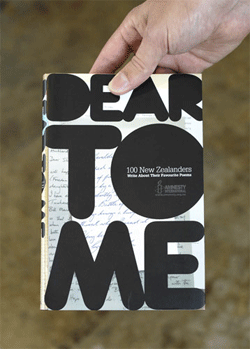
Cover for Dear to Me, designed by Inhouse / New Zealand

Cover for Look at This: Contemporary Brochures, Catalogues & Documents by Adrian Shaughnessy, designed by Non-Format / United Kingdom
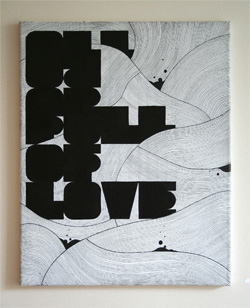
All is Full of Love by Art is Calling me / United Kingdom
Geometrypography
The most pervasive manifestation of The New(er) Typography has been in the form of strictly geometric applications, forcing the alphabet into its most simple forms. Perhaps we owe it all to Milton Glaser’s Baby Teeth and, you know, that landmark poster of his.
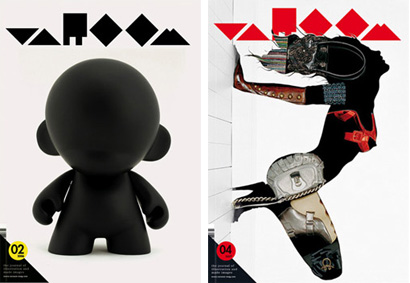
Logo (and covers) for Adrian Shaughnessy’s Varoom magazine, designed by Non-Format / United Kingdom

Packaging for Hanne Hukkelberg’s latest release, Rykestrasse 68, designed by Non-Format / United Kingdom
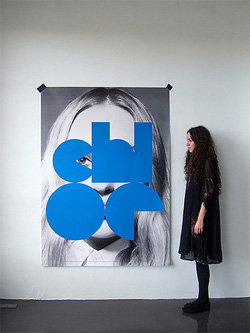
Image for Self-Service magazine, Work in Progress / France
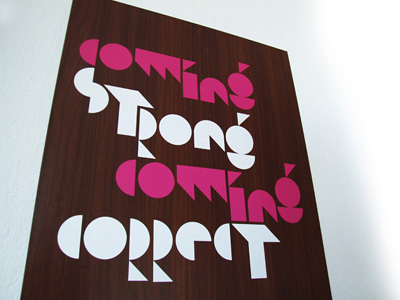
Personal print, designed by Karoly Kiralyfalvi / Hungary
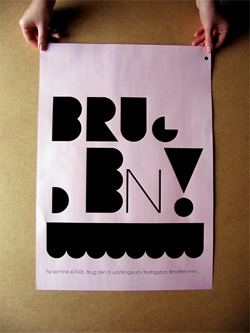
One of a series of posters for a design school’s canteen, designed by MejDej / Denmark
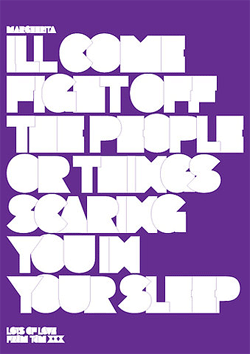
Poster (maybe), designed by tomlobo / United Kingdom
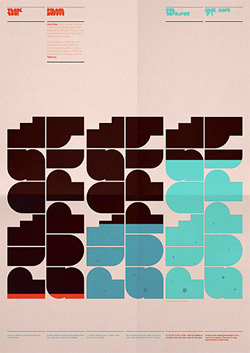
Poster about saving water (maybe), designed by Distrikt55/ United Kingdom
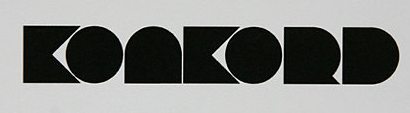
Identity for music label Konkord Agency, designed by Griskevicius Jurgis / Lithuania
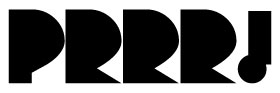
Identity for PRRR TV / Uruguay

Mono typeface, designed by Hula + Hula / Mexico
Plump and Juicy
As some may know, I’m a big fan of bold letters, and bold anything, so a full circle standing in for an “O” brightens my day like few things. The cover of Logo shown above would also fall nicely in this category.
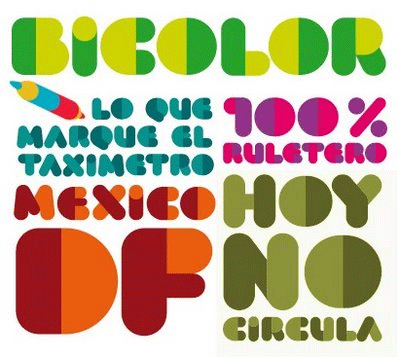
Bicolor typeface, designed by Hula + Hula / Mexico
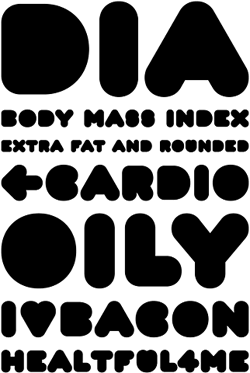
Corpulent typeface, designed by Suitcase Type Foundry / Czech Republic
Stencilization
When you have that much matter to work with, nothing adds a touch of fragility like a stencil treatment and the introduction of Pylons — you know what a Pylon is, right?
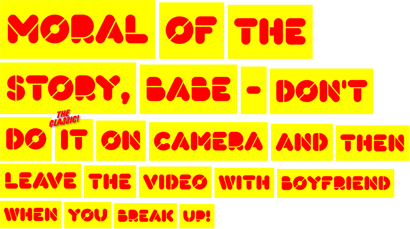
Kada typeface, designed by RBG6 / Stockholm
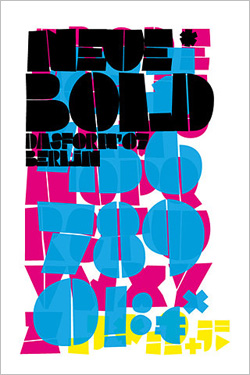
Neue Bold* typeface (or poster? or neither?), designed by mrio / Germany
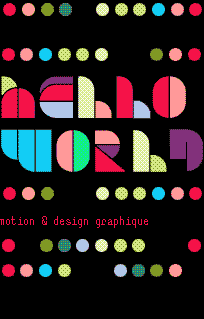
Welcome graphic at Julien Vallée’s web site / Québec
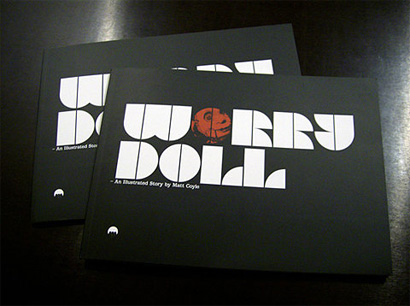
Cover for Matt Coyle’s graphic novel Worry Doll, designed by Designed by Muller [sic] / United Kingdom
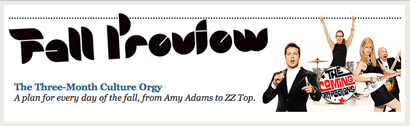
Lettering for New York magazine’s 2007 Fall Preview, designed by Omnivore / USA
Just Plain Weird
And, finally, there has also been a preponderance of highly illustrative and rigidly geometric letterforms that challenge counters and readability. Perhaps this will be The New(estest) Typography come 2008.
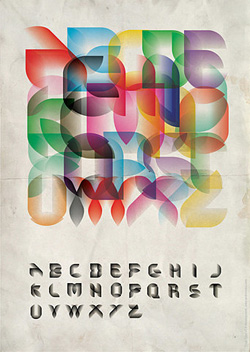
Trick typeface, designed by Andrei Robu / Romania
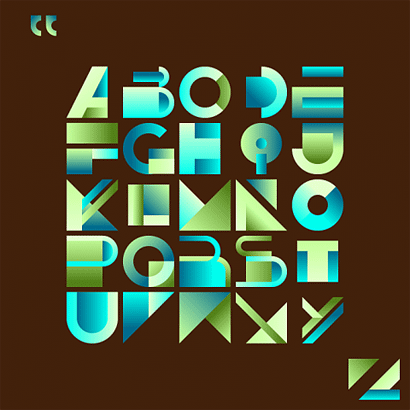
GBG typeface, designed by bns or pommade or something / Not Sure
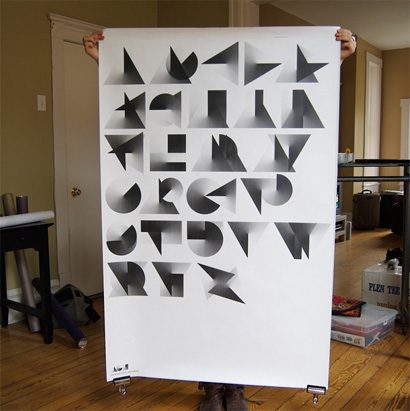
Meaning is Made typeface, designed by Widmest / USA
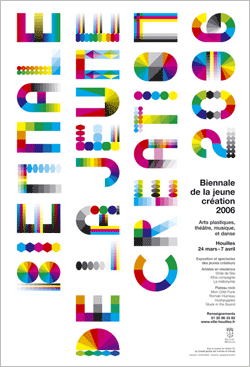
Poster for Biennale de la Jeune Creation 2006, designed by Fanette Mellier / France



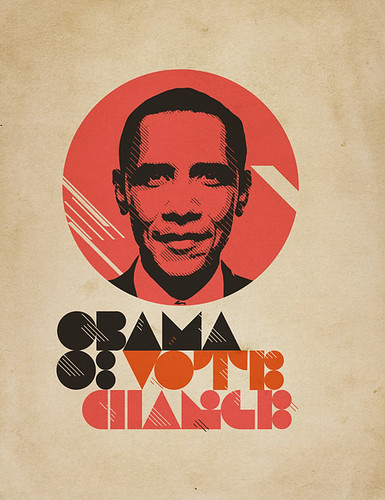

That type and poster by Andrei Robu is freakin' hot.
I do always wonder about typefaces like this, though, especially when they aren't really shown in use. Is this just a really pretty idea he had, or was there a project in mind? I'm sure it would be usable, but I'd like to confirm that the New(erestest) Typography has some practical functionality behind it.
I'm somewhat surprised by all the geometric stuff, though, as I thought much had been played out in the years post-grunge. Or maybe I'm just out of touch.
On Nov.28.2007 at 12:37 PM